
The Golden Rule when buying antiques, is always to ask the seller and to make sure they answer positively one way or the other. If the answer is maybe, could be or it might be an original, then think twice before you buy. Antique fakes are better now than ever and the antique collector really does need to be wary.
Contents
How to check for antique fakes & forgeries, detect restoration spot reproductions.
Beware of reproductions and antique fakes & forgeries, they are out there and they will trap the unwary. Recognizing reproductions, knowing how to detect restoration and knowing your antique marks will all help when buying antiques.
Firstly, reproductions have been around for a very long time and they do have a legitimate function in the antiques market. But only if they are sold as such.
Any seller can place a reproduction, antique fakes or a forgery among genuine antiques and no offence will have been committed. If however, you ask if the piece is genuine and a seller replies that it is, then he has committed an offence under the Trade Descriptions Act.

Think carefully... because if you ask and the seller claims ignorance and you still buy on the assumption that it is genuine; and it then turns out not to be, you are very unlikely to get your money back.
The Golden Rule; is always to ask the seller and to make sure that they answer positively one way or the other.
If you hear, 'I don't know' or 'I'm not sure' or 'It could be, or may be an original blah, blah' ... DO NOT BUY.
It's always better to know what you're getting for your money, and the only sure way to increase your chances of knowing, is to know your antique marks, antique terms and how to spot quality.
Is it Antique? What is an antique?
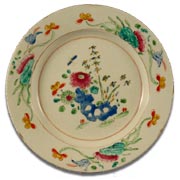
The official definition of an antique is applied to any item that is over 100 years old. So, if you buy an item from an antique shop and it turns out to be less than 100 years old you could potentially have cause for complaint.
However, 'antique' has now become synonymous with 'vintage' and both descriptions are commonly used to describe genuine antiques as well as vintage or general second-hand items.
Today, you would be unlikely to win a court case based on an assumption that something from an antique shop or antique trade stall was over 100 years old.
But, most established local antique auctioneers and antique dealers will usually provide some form of guarantee and almost all established antique auction houses provided a five year guarantee against forgery.
Restoration is something else altogether.
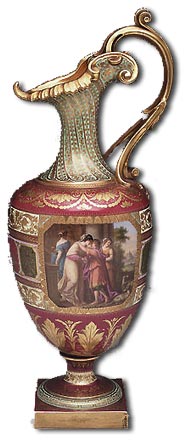
Damage can have a dramatic effect on the value of an antique item, but it is usually fairly noticeable and most experienced buyers/dealers will spot damage from a hundred paces and price accordingly.
Restoration isn't quite so simple and can affect the value just as much as the obvious damage.
Restoration isn't always easy to spot and a good restorer can take a severely damaged piece and make it as good as new. Restored antiques are not fake antiques.
So again, the Golden Rule is always to ask if the piece has been restored.
This applies even more so if a quality piece is being sold for an unusually low price and relates to everything from furniture to ceramics and even silver and bronze.
Persuading a seller to take something back if you are given the opportunity to examine it thoroughly and ask any questions before buying it, is very difficult unless it is a clear case of misrepresentation.
This applies wherever or whoever you buy from, including local auction houses and online internet auctions.
Buying from online internet auctions are a slightly different kettle of fish.
Here you are relying on pictures, which may or not be of the actual item and which may or not be sharp or in focus or show the base marks. In addition the seller will probably not be an expert in what they are selling or in spotting restoration.
Be doubly careful when buying online and make sure you ask all the relevant questions. However, internet bargains can be had and large profits can be made when buying from ill-informed or inexperienced internet sellers.
Most online auctions provide a means of checking a sellers transaction history or reputation with other buyers and you should always check this before buying from them.
Always ask the seller any questions during the buying process ... not after you've parted with your money. Legitimate sellers will never object to your questions or fail to provide you with truthful answers.
Checking for damage or restoration in antiques & valuing accordingly

How much damage or restoration is acceptable varies from seller to seller, some items are more vulnerable to damage simply due to their shape and others by their intended use or purpose.
Every antique item has to be evaluated according to it's age, rarity and desirability so that the collector or buyer can decide whether the condition is acceptable or wait for a more perfect example to come onto the market.
Price is also a consideration, sometimes a rare but badly damaged piece can be added to a collection if it fills a gap until a more perfect piece can be found.
The antique collector just has to make sure they pay the right price for the quality and condition of the piece.
Standards for describing restoration of antiques.
The way that damage or restoration is described can vary enormously. There are no hard and fast rules guiding how these aspects are covered and vagueness seems to be the most common policy.
However, there are professional bodies such as BADA and membership of this is only open to dealers with high standards of quality and integrity. So, buyers should be reassured by this.
The use of the word 'restored' or simply 'R' on the label usually means that the seller is reluctant to detail the extent of the repairs.
Knowing that doing so will probably reduce the value considerably or ruin the sale. A reliable and conscientious dealer will do his best to list all areas of restoration and will also detail this on the bill of sale, along with the approximate date of the antiques manufacture.
In light of this it is useful to have some understanding of how to detect restoration for yourself.
Detecting restoration in antiques
There is no way to restore pottery and porcelain that is wholly undetectable. Certain techniques are almost invisible but usually there is a way to detect them.
Teeth, tongues, lips, cheeks and nose :
When you watch experts examine a piece of pottery or porcelain for restoration you will see them use a variety of methods; from tapping against the teeth to touching with the tongue, lips, etc. This allows them to detect any differences in temperature or texture some may even sniff the item to detect the lingering smell of solvent or paint. Use these methods regularly and your rate of detection will improve the more you do it.
Keys and Coins :
Very gently tapping with a small metal item such as a key or a coin will often show up an area that has been replaced using a composite material. If, for example, a figure has lost a hand and part of the arm has been remade, there will be a difference in the sound given off when the area is tapped.
Start at the shoulder and tap as you gently but consistently move slowly down the arm, when the sound changes from a clink to a dullish clunk you have probably found a repair. If the arm has only been broken and repaired, say at the elbow, then the clink sound will return as you continue down the arm to the hand. This method is ideal for figures but can be used on other items as well.
Translucency ( porcelain only) :
Porcelain plates, saucers, vases, etc will often be translucent, any cracks or breaks which have been filled or painted over will be visible when the item is held up to a strong light. With long necked vases, or hollow items, it is possible to hold a small inspection torch inside the body and the light will shine through and reveal any obvious repairs.
Pins and other small sharp objects :
It is very easy to detect restoration using a pin or a small sharp knife which will show the difference between restored porcelain, (soft, like a painted surface) and fired porcelain (hard, like glass). Practice this method by using a pin to touch a painted surface such as a window frame or radiator, this will feel soft and the point of the pin will drag on the surface.
Then touch or lightly drag the pin against a piece of glass and you will notice that the pin will glance off or glide along the surface. You may not be very popular if you try to use this method in a dealers shop or during an auction viewing, but if you are very careful it shouldn't cause any damage.
Ultra Violet Light: This was quite a good method of antique restoration detection, but many modern restoration techniques do not show up under ultra violet light.
Where it does work the ultra violet Light can show up any new paint that has been added over a repair, although it can mislead you when gauging the size of the repair, as some restorers will over-paint a larger area in order to disguise the beginning and end of the repair; this means that under ultra violet light, restoration can look much worse that it really is.




Dimi
Fakes & Forgeries