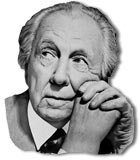
antique marks  - everything you need to know about art nouveau antiques

antique marks  - everything you need to know about art nouveau antiques
antique marks home antique marks blog antique marks classifieds antique marks auction calendar auction diary antique marks site blog rss rss antique marks
 
antique marks  - everything you need to know about art nouveau antiques antique marks  - everything you need to know about art nouveau antiques antique marks  - everything you need to know about art nouveau antiques
antique marks  - everything you need to know about art nouveau antiques antique marks  - everything you need to know about art nouveau antiques     antique marks  - everything you need to know about art nouveau antiques
antique marks

antique-marks.com

Valid CSS!


The art nouveau artists from rene lalique to louis comfort tiffany, anton gaudi and archibald knox.


antique marks - art nouveau  artists - wmf organic tray


A selection of the great many art nouveau artists and designers that embraced the art nouveau style.

There were many gifted designers of the art nouveau period, many whose work is now highly valued and very collectable.

When comparing and contrasting the work of these designers, it is easy to see why the style is so hard to categorise and why there has been a prolonged debate about what art nouveau actually is.


Victor Horta (1861-1947)

Baron Victor Horta was born in Ghent, Belgium in 1861. He studied drawing, textiles, and architecture at the Academy of Beaux-Arts in Ghent, then went to Paris to work. He returned to Belgium and drafted for Classical architect Alphons Balat. antique marks - art nouveau victor horta tassel hotel lobby

antique marks - art nouveau artists and designersIn 1890 he set up his own firm, and in 1893 designed what is widely regarded as the first architectural expression of mature Art Nouveau, Tassel house in Brussels. The innovative use of exposed ironwork and open-plan space characterised Horta’s style

One of the pioneers and leading practitioners of art nouveau architecture. He abandoned the neo-classical style of his schooling years in favour of an innovative art nouveau approach that built on irregular shapes and lush curved lines.

His first major work, Hotel Tassel (1892-1893), in Brussels, set forth his principal themes: exposed cast iron as a structural material; produced a centralized floor plan in place of the traditional corridor arrangement; and paid close attention to ornamentation.

He supervised the interior decorationand even the furniture design in all of all his buildings, and his characteristic flowing whiplash lines, inspired by vegetation, were prominent in his wall decorations, doors, and staircases, as exemplified in his most lavish private house, Hotel Solvay (1894), in Brussels.

In public buildings such as the Maison du Peuple (1899, destroyed 1964), the Brussels headquarters of the Belgian Socialist party, he produced glass and iron facades that were some of the most advanced of the day. He was an important European predecessor of the modern 20th-century International Style, particularly in his use of exposed structural ironwork and glass facades.

His many works include:

  • 1889 - LAMBEAUX SCULPTURE PAVILION. Brussels
  • 1890 - MATTYN HOUSE. Brusselsantique marks - art nouveau artists and designers
  • 1892 - TASSEL HOUSE. 1892-3. Brussels
  • 1893 - AUTRIQUE HOUSE. Brussels
  • 1894 - FRISON TOWN HOUSE. Brussels
  • 1894 - WISSINGNER HOUSE. 1894-03. Brussels
  • 1895 - HOTEL SOLVAY. Brussels
  • 1895 - HOTEL VAN EETVELDE. 1895-98. Brussels
  • 1896 - MAISON DU PEUPLE. 1896-8. Brussels
  • 1898 - HORTA HOUSE. now MUSEE HORTA. Brussels
  • 1901 - A L'INNOVATION DEPARTMENT STORE. 1901-3. Brussels
  • 1902 - BELGION PAVILION, INTERNATIONAL EXPOSITION OF DECORATIVE ARTS. Turin
  • 1902 - MONUMENT TO BRAHMS. Vienna
  • 1903 - GRAND BAZAAR DEPARTMENT STORE. Frankfurt
  • 1903 - WAUCQUEZ DEPARTMENT STORE. 1903-5. Brussels
  • 1903 - HALLET HOUSE. Brussels
  • 1906 - WOLFERS BUILDING. Brussels
  • 1906 - BRUGMANN HOSPITAL. 1906-26. Brussels
  • 1914 - HALLE CENTRAL, MAIN RAILWAY STATION. 19144-52. Brussels
  • 1925 - PALAIX DES BEAUX-ARTS, EXPOSTITION DES ARTS DECORATIFS. Paris
  • 1928 - MUSEUM OF FINE ARTS. Doornik


Antoni Gaudi i Cornet (1852-1926)antique marks - art nouveau  and anton gaudi

Antoni Gaudi was born on 25th June 1852 at Reus in the province of Tarragona and was one of the most controversial art nouveau designers

Catalan architect. Gaudi was a devout Catholic whose faith was an integral part of his creative vision. He trained in Barcelona and became the most famous architect of the Modernista movement, drawing on gothic and Moorish traditions to create a unique plastic-organic style.

Anton Gaudi - The completed east transept of the Sagrada Familia with its four towers and three portals.Through his involvement in conservative Catholic politics he gained commissions from the industrialist Eusebio Guell and the Catholic Church.

In 1883 he was appointed Director of Works for the Sagrada Familia cathedral in Barcelona, which was started by the architect Francisco de Paula Villary Lozano. Gaudi set about redesigning the building and he continued working on it until his death.

Antoni Gaudi's life's work is closely attached to the city of Barcelona, which owes many architectural jewels to this imaginative and very individualistic master builder.

The keynotes of his architecture were fluid lines and extravagant exterior decoration much of it done by using a mixture of applied materials to the outside walls.

His best known building is the cathedral, Temple de la Sagrada Familia, which is still incomplete, and where the outside seems to have seeped and flowed in some places, while in others it is moulded into organic shapes.

He created many other houses in the Art Nouveau style, like the Casa Vicens, Casa Calvet, Casa Battlo, Casa Mila, the monastery school of the Theresian order, the palace Guell and the Colonia Guell chapel, among others.


Archibald Knox(1864-1933) antique marks - art nouveau  artists - Archibald Knox

Archibald Knox was born in the village of Cronkbourne, near Tromode on the Isle of Man in the April of 1864. The son of William Knox, a master machine maker, originally from Ayr in Scotland, the young Knox was educated at elementary and grammar schools in Douglas, the island’s capital.

antique marks - art nouveau liberty & co. pewter tea setFrom 1878 to 1883 he studied at Douglas School of Art, gaining qualifications in Design and the Principles of Ornament.

From 1884 to 1888, Knox taught art at the school and in 1889 he gained his Art Masters Certificate.

Influenced and inspired by the Manx countryside and the many ancient Celtic stone crosses found on the island, he wrote Ancient Crosses on the Isle of Man and The Isle of Man as a sketching ground in the 1890s.

In 1897 Archibald Knox moved to the English mainland and took a teaching post at Redhill School of Art in Surrey.

He was also involved with the studios of the distinguished designer Christopher Dresser and he began designing for Liberty & Co. of London, creating items of jewellery and working on their Cymric series. Archibald Knox 1902 - The Magnus a silver and enamel clock for liberty & co

After 1902, the Tudric series of pewter ware was introduced for which Knox designed innumerable items on a piecework basis.

The Knox name does not appear on any of the objects that he designed for liberty, nor in their catalogues of the time. This wasn't the companys usual practice, but most of their records were destroyed in the London blitz of WW2 and many articles are just labeled as ‘attributed to Archibald Knox’.

In 1913 after a year’s stay in America, Knox returned to the Isle of Man where he resumed teaching.

During the war years 1914-1918, he was employed as a censor in an Alien Detention Camp at Knockaloe. Like many of the artists and craftsmen of the Art Nouveau period, Archibald Knox was a prolific designer. He produced many hundreds of incredibly innovative ideas for Liberty’s.

He spent the last years of his life teaching full and part time at schools in Douglas before his death from heart failure, in 1933.


William H Bradley (1868 -1962)

American graphic artist. Bradley's work drew on the contrasting influences of William Morris and Aubrey Beardsley and his illustrations were among the earliest examples of American Art Nouveau. Trained as a wood engraver in the mid -1880s, he turned to line engraving as his first technique became obsolete. His covers for the Chicago journal Inland Printer in 1894 established him as an exponent of the new style, and he gained widespread acclaim for his posters for another Chicago publication, The Chap Book. In 1895 he returned to his birthplace Massachusetts, where he turned to traditional printing methods, the result being his own periodical Bradley: His Book. He exhibited work at the Paris gallery of Siegfried Bing in 1895, but by 1900 his career was in decline and thereafter he worked largely in commercial printing and type design


Edouard Colonna (1862 -1948)

German -born American designer. Colonna trained in Brussels and moved to the United States in 1882. After briefly working for Associated Artists, the company of Louis Comfort Tiffany, he moved to Ohio, where he produced a series of designs published as the Essay on Broom Corn. The book reveals Colonna to have been a visionary designer. He returned to Paris in 1898 to work for Siegfried Bing. Along with Georges de Feure and Eugene Gaillard, his designs formed the nucleus of Bing's pavilion at the 1900 Paris Universal Exposition.


Wafter Crane (1845 -1915)  

English painter, illustrator and designer. Prominent in the Arts and Crafts Movement and strongly influenced by the Pre -Raphaelites, Crane was both a fierce critic of Art Nouveau and an early inspiration for many artists who adopted the style. His illustrations for Fiord's Feast (1889) display many of the features of Art Nouveau. Crane exhibited in Belgium in the early 1890's where his work reached a progressive audience, and from 1894 he produced designs for the Kelmscott Press, set up by William Morris. He became principal of the Royal College of Art in London in 1898, and traveled and lectured extensively across Europe and the United States


August Endell (1871 -1925)

German architect and designer. Endell moved to Munich from Berlin in 1892, where he studied aesthetics, philosophy and psychology, before turning to architecture and art with the encouragement of Herman Obrist. His designs and illustrations, which appeared in journals such as Par, featured abstract natural shapes that show Obrist's influence. Endell is most renowned for the distinctive facade and interiors of the Elvira photography studio in Munich (1897 -8), his first architectural design. As well as being a major figure of German Jugendstil, Endell anticipated abstract art in his writings on art theory in books such as Um die Schonheit (On Beauty) of 1896. He returned to Berlin in 1901 and set up a school in 1904. In the years before World War I, his work displayed a trend towards greater simplicity


Georges de Feure (1868 -1928)

French painter and designer. De Feure worked as an actor, a costumier and then as an interior decorator. He also painted watercolours and oils, often of delicate women in a sensuous Symbolist style that illustrates the links between Symbolism and Art Nouveau. De Feure first exhibited furniture in Paris in 1896 and began working for Siegfried Bing in 1899. in 1900 he designed elements of Bing's pavilion for the 1900 Paris Universal Exposition, where his work was praised for its French refinement. De Feure continued to design commercially until the outbreak of World War 1 in 1914.


Fidus (Hugo Hoppener) (1868 -1948)

German graphic artist. Fidus trained in Lubeck and then Munich, where he lived on the commune of the painter W Diefenbach. In 1892 he moved to Berlin and set up another commune. His early illustrations contained dream like Jugendstil abstractions, and his work appeared frequently in Jugend. Fidus held mystical Theosophical beliefs and during the 1890's he became interested in German mythology. His engravings of peasants and warriors evoked an insular worldview at odds with the internationalist outlook promoted by many German artists after 1900. He continued working in an Art Nouveau style long after it was fashionable


lvan Fomin (1872 -1936)

Russian architect and designer. Suspended from the Academy of Arts in St Petersburg in 1894 for participating in student unrest, Fomin joined the office of Fyodor Shehktel' after working for the architect Lev Kekushev. During his time with Shekhtel' he contributed to the 1902 New Style exhibition. His designs display a monumental simplicity that alludes to traditional Russian styles as well as the modern geometry of Art Nouveau from Vienna and Glasgow. In 1905 Fomin returned to his studies and after 1917 he designed a number of modern classical buildings, most famously the headquarters of the Moscow Soviet in 1928


Georges Fouquet (1862 -1957)

French jeweller. The son of a goldsmith, Fouquet took over the family firm in 1895 and soon adopted the Art Nouveau style. In 1900 he produced jewellery designed by Alphonse Mucha and won a gold medal at the Paris Universal Exposition. Mucha also created the interiors of Fouquet's shop in 1901 Although initially inspired by nature and Japanese art, he went on to make more geometric pieces with Egyptian motifs, resulting in a revival of his fortunes in the 1920s with the advent of Art Deco.


Eugene Gaillard (1862 -1933)

French designer and architect. Gaillard rejected a career in law to take up interior design and decoration. Siegfried Bing employed him alongside Georges de Feure and Edouard Colonna to create interiors for his pavilion at the 1900 Paris Universal Exposition. The abstract natural forms of his furniture reflected a mistrust of historicism and he became a vocal advocate of modern design. Around 1903 he left Bing's atelier and set up his own firm. In 1906 he published A Propos du Mobilier (On Furniture).


Emile Galle (1846 -1904)

antique marks - art nouveau  artists - emile galleFrench glassmaker, ceramicist and furniture designer.

Galle studied botany and mineralogy in Germany before taking over the family glassmaking firm in Nancy in 1874.His work demonstrates his interests in botany, Symbolism and Japanese art.

He first exhibited furniture at the 1889 Paris Universal Exposition, where his style displayed a debt to French traditions.

Galle was an astute businessman and his workforce expanded rapidly in the 1890's His unrivalled stature in the French decorative arts was confirmed in 1900 when he was awarded the Legion d'honneur.

In 1901 he helped set up the Ecole de Nancy. After his death, the firm continued until the 1930s


Akseli Gallen-Kallela (1865 -1931)

Finnish painter and designer. Trained in Helsinki and Paris, Gallen-Kallela painted National Romantic landscapes, before adopting a Symbolist style in the 1890's He was intrigued by traditional art and life in rural Karelia, and turned his artistic attention to the Finnish epic the Kalevala. Gallen -Kallela was a defining figure of Finnish Art Nouveau. His country house 'Kalela' combined traditional and modern ideas, as did his designs for textiles and stained glass. Murals for the Finnish pavilion at the 1900 Paris Universal Exposition brought his work to an international audience. During the 1910s and 1920s he had close ties with the German Expressionists, but he later returned to the Kalevala embarking on a plan to fully illustrate the story.


Hector Guimard (1867 -1942)

French architect and designer. Guimard studied at the Ecole Nationale des Arts Decoratifs and the Ecole des Beaux -Arts in Paris. He then embarked on an architectural career that produced some of the most innovative buildings of Art Nouveau. The influence of Eugene-Emmanuel Viollet-le-Duc was apparent in his use of ironwork, and his designs for the new Paris Metro stations of 1900 combined daring linear forms with industrial methods of construction. Guimard also designed a number of houses during this period, as well as a range of furniture and objects that reflected the contrast between his abstract flowing style and the more figurative Art Nouveau of Nancy. In later years Guimard was uncomfortable with Modernism. He left France for the United States in 1939.


Josef Hoffmann (1870 -1956) antique marks - art nouveau  artists - josef hoffman

Austrian architect and designer.

Hoffmann studied under Otto Wagner in Vienna, and in 1896 began working in his office. He joined the Secession in 1897 and became a professor at the Kunstgewerbeschule in Vienna in 1899.

He was initially attracted to the sweeping decoration of Jugendstil, however, his style soon became more geometric.

In 1903 Hoffmann set up the Wiener Werkstatte, to which he contributed a vast range of furniture, metalwork, glass, ceramics and textile designs. He also provided the backbone of its architectural practice.

His best -known buildings were the Purkersdorf Sanatorium outside Vienna (1904 -6) and the Palais Stoclet in Brussels (1905 -11) one of the last great Art Nouveau Gesamtkunstwerk


Gustav Klimt (1862 -1918)

antique marks - art nouveau  artists - gustav klimtAustrian painter and designer.

In 1883 Klimt opened a studio after training at the School of Arts and Crafts in Vienna. His early paintings were academic in style, but he became increasingly influenced by Symbolism, provoking bitter criticisms from Vienna's artistic establishment.

In 1897 Klimt was one of the founders of the Secession, becoming the group's first president; he also set up the journal Ver Sacrum.

The Beethouen Frieze, painted in 1902 to decorate the Secession Building, signalled an even more stylised aesthetic. Klimt remained a prominent figure in the Secession until he resigned in 1905.

He was associated with the Wiener Werkstatte, his most notable contribution being his friezes for the Palais Stoclet in Brussels designed by Josef Hoffmann in 1905 -11


Rene Lalique (1860-1945)

Rene Jules Lalique was born in Ay, Marne, France on April 6, 1860. He was another supremely gifted artist that embraced art nouveauantique marks - art nouveau  artists -  rene lalique

antique marks - art nouveau  artists -  rene lalique jewelleryInitially he was a glass designer, renowned for his stunning creations. including perfume bottles, vases, jewellery, chandeliers, clocks, and, in the latter part of his life, automobile hood ornaments. The firm he founded is still active.

At age 16, he apprenticed with the Parisian jeweller, Louis Aucoq.

From 1878-1880 he attended Sydenham Art College in London, and on returning to France, he worked for Aucoq, Cartier, Boucheron and others.

In 1882 he became a freelance designer for several top jewelry houses in Paris and four years later established his own jewelry workshop.

By 1890, Lalique was recognized as one of France's foremost art nouveau jewelry designers; creating innovative pieces for Samuel Bing's new Paris shop, La Maison de l'Art Nouveau. He went on to be one of the most famous in his field, his name is synonymous with creativity and quality.antique marks - art nouveau  artists - lalique vase

In the 1920s he became famous for his work in the Art Deco style and among other things he was responsible for the walls of lighted glass and the elegant glass columns that filled the dining room and grand salon of the SS Normandie.

Much of his jewellery is exquisitely delicate, and depicts natural forms like flowers, leaves and seed pods. His pieces often had little or no intrinsic value as he didn't use large gemstones in his work.

He refined the use of glass in jewellery, not as imitation diamonds or other precious stones, but as a painter uses paint.

Rene Lalique died on May 5, 1945 and he is buried in Le Père Lachaise Cemetery, in Paris, France.


Arthur Lasenby Liberty (1843 -1935) antique marks - art nouveau  artists - liberty

English merchant. In 1875 Liberty opened his first shop, Fast India House, on Regent Street in London.

His imported Oriental wares helped define the fashionable aesthetic taste in London and Liberty's also stocked Arts and Crafts goods.

In 1890 he opened a Paris branch of his shop. The company both sold and produced English Art Nouveau objects, most notably the 'Cymric' and 'Tudric' ranges by designer Archibald Knox.

Liberty also introduced continental Art Nouveau to London shoppers, stocking such objects as chairs by Richard Riemerschmid and ceramics by the Hungarian firm Zsolnay........ more


Charles Rennie Mackintosh a reformer of the excesses of the Art Nouveau style. His works in 1900 were an indication of what was to appear in the next decades.

antique marks - art nouveau  artists -  art deco artist Charles Rennie MackintoshBorn in Glasgow, the second son in a family of eleven children, his father was a superintendent of police.

From an early age he was interested in a career as an architect, and when he was sixteen he was articled in the office of the Glasgow architect John Hutchison, while also studying as an evening student at the Glasgow School of Art. antique marks - art nouveau  artists -  rennie mackintosh hill house slat back chair

Here he came into contact with J. Herbert MacNair and theMacdonald sisters, Frances and Margaret (whom he later married), with whom he was to form the group which became known as the Glasgow Four.

They exhibited together on a number of occasions; and the work shown at the 1896 Arts and Crafts Exhibition was greeted with incomprehension and distaste.

In 1889, Mackintosh joined the firm of Honeyman & Keppie, where he remained until 1913, becoming a partner in 1904. His most important architectural and decorative work was done during this period.

In 1896, in his capacity as an assistant at Honeyman & Keppie, he won the competition to build the new School of Art in Glosgow.

From 1897 until 1906 he was occupied with designing and furnishing the chain of tea-rooms established in Glasgow by the Misses Cranston as part of a campaign to combat the widespread daytime drunkenness. He exhibited, with the other members of the group of 'Four', at the Wiener Werkstatte, and found greater acceptance of his ideas in europe than in his home town or in London.

He had patrons in Scotland who allowed him a remarkable degree of freedom to pursue his ideas, notably the publisher, Walter Blackie, for whom he built Hill House at Helensburgh.

In 1913, Mackintosh left Scotland but did very little further work.

In 1920 he gave up architecture and devoted the remainder of his life to painting.


Margaret MacDonald (1865 -1933)

Margaret Macdonald was one of the most gifted and successful women artists in Scotland at the turn of the century. Her output was wide-ranging and included watercolours, graphics, metalwork and textiles. Arguably her greatest achievements were in gesso, a plaster-based medium, which she used to make decorative panels for furniture and interiors.

Macdonald was born in England and came to Glasgow with her family around 1890. She enrolled as a day student at Glasgow School of Art where she met Chalres Rennie Mackintosh and Herbert McNair. She left the School in the mid 1890s and set up an independent studio in the city with her sister, Frances.

The sisters worked together until Frances’s marriage and departure for Liverpool in 1899. Margaret married Charles Rennie Mackintosh in 1900.

Collaboration was key to Margaret Macdonald’s creativity. The partnership with her sister in the 1890s produced metalwork, graphics, and a series of book illustrations.

Her collaboration with Mackintosh comprised primarily the production of panels for interiors and furniture, notably for the tea rooms and The Hill House. The precise nature of their partnership is difficult to define, because little documentation survives. However it is certain that Macdonald played an important role in the development of the decorative, symbolic interiors of the early 1900s, including the House for an Art Lover portfolio, the Rose Boudoir, Turin and the Willow Tea Rooms.

Ill health and the strain of Mackintosh’s declining career contributed to a decline in her own output and no work after 1921 is known.

Margaret Macdonald died in London in 1933, five years after her husband.

The largest single holding of her work is housed at the Hunterian Art Gallery, University of Glasgow.


Arthur Heygate Mackmurdo (1851 -1942)

English architect and designer. Mackmurdo studied at oxford and was a disciple of John Ruskin. He was a leading figure in the Arts and Crafts Movement, yet, like Walter Crane, his work also contained the seeds of Art Nouveau. His designs for wallpaper and textiles, together with his chairs for the Century Guild, display the flowing linear style of Art Nouveau. The Century Guild, of which he was a founding member, ceased its activities in 1892, and he gradually turned towards classical architecture.

A H Mackmurdo was originally a friend of William Morris, founder of the Arts & Craft Movement. Along with Morris, he was involved in setting up the Society for the Protection of Ancient Buildings. Over the years, though, Mackmurdo became far more interested in the idea of mass production, in order to get the beautiful (and increasingly practical) homewares they designed to the ordinary people. As this was firmly against Morris's basic principals of hand-crafting, they followed very different paths.


Louis Majorelle (1859 -1926)

Louis Majorelle was a French decorator and furniture designer who manufactured his own designs, in the French tradition of the ébéniste. He was one of the outstanding designers of furniture in the Art Nouveau style, and after 1901 formally served as one of the vice-presidents of the École de Nancy.antique marks - art nouveau artsits - louis marjorelle

In 1861, his father, Auguste Majorelle (1825 – 1879), who was also a furniture designer and manufacturer, moved the family from Toul to Nancy. There, Louis finished his initial studies before moving to Paris in 1877 for two years of work at the École des Beaux-Arts. On the death of his father, he cut short his studies and returned to Nancy to oversee the family faience and furniture factories. This would occupy him for the rest of his life.

On 7 April 1885, Majorelle married Marie Léonie Jane Kretz, daughter of the director of the municipal theaters in Nancy. Their only child, Jacques Majorelle, who himself would became an artist, was born 7 March 1886.

The Majorelle firm's factory was designed by famous École de Nancy architect Lucien Weissenburger (1860 – 1929) and located at 6, rue du Vieil-Aître in the western part of Nancy.

antique marks - art nouveau artsits - louis marjorelle - emille galle marjorelle vaseIn the 1880s Majorelle turned out pastiches of Louis XV furniture styles, which he exhibited in 1894 at the Exposition d'Art Décoratif et Industriel in Nancy, but the influence of the glass and furniture maker Emile Gallé inspired him to take his production in new directions.

In the 1890s, Majorelle's furniture, embellished with inlays, took their inspiration from nature: stems of plants, waterlily leaves, tendrils, dragonflies. Before 1900 he added a metalworking atelier to his workshops, to produce drawerpulls and mounts in keeping with the fluid lines of his woodwork. His studio was responsible for the ironwork of balconies, staircase railings, and exterior details on many buildings in Nancy at the turn of the twentieth century.

Often collaborating on lamp designs with the Daum Frères glassworks of Nancy, he helped make the city one of the European centers of Art Nouveau. At the apogee of the Belle époque, during the 1900 Paris World's Fair (Exposition Universelle), Majorelle's designs triumphed and drew him an international clientele. antique marks - art nouveau artsits - louis marjorelle - villa marjorelle

In 1898, Majorelle hired Henri Sauvage (1873 – 1932), a young Parisian architect, to collaborate with Weissenburger on the building of his own house, known as the Villa Jika (after the acronym of Majorelle's wife's maiden name), but now popularly known as simply the Villa Majorelle, in Nancy. Majorelle, like many industrialists in Nancy, located his house across the street from his factory, but in a relatively new area of town, the large parcel of land which it occupied made it seem like a veritable country estate. His house and factory were located on land that was given to him by his mother-in-law, Madame Kretz.

Sauvage and Weissenburger's three-story design for the villa represents the true flowering of Art Nouveau architecture in Nancy, with multiple bow windows and floral motifs covering the exterior. Majorelle himself produced the ironwork, furniture, and the interior woodwork, such as the grand staircase. Majorelle located his own personal studio on the third floor under a gabled roof, and included a huge arched window combled together with spandrels that evoke the branches of a tree or flower. Most of the floral motifs seen in the house use the forms of the monnaie-du-pape plant. In addition, Majorelle employed Jacques Gruber to create the original stained glass for the house, and on the interior, the artisans created impressive painted friezes in the dining room, which contains a large ceramic Art Nouveau fireplace designed by Alexandre Bigot.

antique marks - art nouveau artsits - louis marjorelle lampIn February 1901, Majorelle became one of the founding members of the École de Nancy, alternatively known as the Alliance provinciale des industries d'art, which was a group of artists, architects, art critics, and industrialists in Lorraine who decided to work in a collaborative fashion, and predominantly in the Art Nouveau style.

They, headed by Gallé (until his death in 1904, and thereafter by Victor Prouvé) did this for several reasons, chief among which was to ensure a high standard of quality of work in the French decorative arts, of which Lorraine artists were the chief producers at the time.

Majorelle was one of the vice-presidents of the group from the outset, remained so throughout the existence of the École de Nancy, and was certainly considered one of the group's leaders. For the most part, he and the other members worked to promote the work of Lorraine decorative artists through their advocacy of the establishment of a school for industrial arts, their participation at major exhibitions (as well as organizing their own shows), and through their collaborative efforts on individual art pieces and buildings, almost all of which were in the Art Nouveau style, and which helped produce to some extant a unity among the art and architecture produced by Lorrainers. Majorelle was consistently one of the internationally-renowned figures of the group who could always be found at any show at which the group exhibited. His connections with the Parisian art circles also helped assure the renown of Lorraine artists in the French capital.

The École de Nancy, however, was often in short supply of funding, and the formal artistic cooperation among its members slowly seemed to disintegrate during the First World War.

By 1910, Majorelle had opened shops for his furniture in Nancy, Paris, Lyon, and Lille


In 1914, with the outbreak of war, Majorelle hoped to hold out and continue production in Nancy. Unfortunately, in an event apparently unrelated to the war, his factories on the rue de Vieil-Aître suddenly caught fire on the morning of 20 November 1916. The conflagration, no doubt spurred on by the fresh supply of lumber, unfinished furniture, and sawdust, burned virtually all the firm's sketches, awards, molds, equipment, and archives that documented the fifty-year history of the enterprise. antique marks - art nouveau artsits - louis marjorelle chair

In 1917, to add insult to injury, the German aircraft bombing of Nancy destroyed the Majorelle shop on the rue Saint-Georges. The Majorelle family reported that their shop in Lille had been looted by advancing German troops.

Majorelle relocated to Paris for the remainder of the war, where he worked in the workshops of fellow furniture designers. After the war, he reopened the factory and his shop, and continued to collaborate with the Daum glassworks and produce furniture, though these late designs show the stiffened geometry of Art Deco.

Majorelle died in Nancy in 1926. After his death, his family, whose fortunes had been damaged severely by the war, could no longer afford to live in the Villa Majorelle, and the house and much of the outlying property were sold off in parcels.

Majorelle's factories closed in 1931. Eventually, the villa went through several architectural modifications, including the addition of a concrete bunker near the rear and the enclosure of the front terrasse. The large stone fence and gate that surrounded the property were eventually reduced to a small piece around the house, which itself went through various uses and owners over the next century.

Today, the Villa Marjorelle has been acquired by the city of Nancy, which is undertaking a long-term project of renovation and restoration.


Julius Meier-Graefe (1867 -1935)

German art critic and dealer. After studying engineering in Munich, Zurich and Liege, Meier -Graefe went to Berlin in 1890 He became involved in the art scene, and in 1894 he co -founded the journal Pan. in 1895 he moved to Paris, where he started another periodical, Dekorative Kunst in 1897. Committed to the design reform aspects of Art Nouveau as well as its aesthetic, he resolved to put his ideas into practice when, in 1899, he set up La Maison Moderne. The aim of this shop was to promote modern design to a broad public. Though initially successful, it folded in 1904 as Art Nouveau became unfashionable.


Hermann Obrist (1862-1927)

Swiss-German designer. Perhaps the pivotal figure in the development of Jugendstil in Munich, Obrist encountered the Arts and Crafts Movement when travelling in Britain in 1887, where he trained as a ceramicist. His work gained a gold medal at the 1889 Universal Exposition in Paris. Following his move to Munich in 1894, Obrist came to prominence in 1896 with an exhibition of thirty -five embroideries that exemplified his abstract approach to nature in art. A founder of the Munich Vereinigte Werkstatten fur Kunst im Handwork in 1897, he was also a prolific writer and teacher. His ideas about abstraction influenced the Russian artist Wassily Kandinsky.


Joseph Maria Olbrich (1867 -1908)

Like Josef Hoffmann Olbrich worked in the office of Otto Wagner in Vienna from 1894, becoming chief assistant in 1896. in 1897 he was involved in founding the Secession, and his design for the Secession Building, begun 1898, announced the importance of the classicism in Viennese fin-de-siecle architecture.

In 1899 he was invited to join the artists' colony at Darmstadt, where he designed a series of houses, studios and galleries. Olbrich helped set up the Deutsche Werkbund in Munich in 1907.


Bernhard Pankok (1872 -1943)

German painter, architect and designer. Pankok trained as a painter in Munster and moved to Munich in 1892. After some time as a portraitist, he began contributing to Jugend and Pan. He turned to furniture design in 1897, and in the same year he helped set up the Vereinigte Werkstatten fur Kunst im Handwerk. In 1899 he created adventurous Jugendstil furniture for the villa of Hermann Obrist. Pankok exhibited at the 1900 Paris Universal Exposition, and in 1901 he moved to Stuttgart, where he lectured and continued his design and architectural career


Richard Riemerschmid (1868 -1957)

German architect and designer. Though he trained as a painter at the Munich Academy, Riemerschmid was best known for his furniture designs, which he turned to in 1895 after being inspired by the Arts and Crafts Movement. In 1897 he co-founded the Vereinigte Werkstatte fur Kunst im Handiwork. He displayed an interior scheme, the 'Room for an Art Lover', at the 1900 Paris Universal Exposition, and in 1901 he designed one of Munich's most celebrated fin-de-siecle buildings, the Schauspielhaus.

In 1903 he joined the Dresden Werkstatte. His designs betrayed a simplicity that set them apart from more elaborate Art Nouveau, and his series of Machinenmobel ('machine-made furniture'), first exhibited in 1906, showed his engagement with modern manufacturing. In 1907 he helped found the Deutsche Werkbund.


Fyodor Shektel' (1859 -1926)

Russian architect and designer. After studying in Moscow, Shekhtel' worked for the architect A Kaminsky, a member of the Mir Iskusstva artists' group.'His early work combined traditionaI styles with Art Nouveau to create a specifically Russian variant. Between 1900 and 1902 he built mansions in Moscow, and in 1901 designed the Russian pavilions at the Glasgow International exhibition.

His office was behind the 1902 New Style exhibition in Moscow, which showcased Western and Russian designers.


Gustave Serrurier-Bovy (1858 -1910)

Belgian architect and designer. Serrurier trained in Liege in the 1870s, where he encountered the teachings of John Ruskin, William Morris and Eugene-Ernmanuel Viollet-le-Duc.

In 1884 he set up a company in Liege selling imported wares and his own furniture. Serrurier exhibited at La Libre Esthetique in 1894 and 1895, and in 1897 he contributed to the Congo pavilion at the Brussels Universal Exposition. He opened a branch of his business in Paris in the same year. The Pavilion Bleu, a restaurant built for the Paris Universal Exposition 0f 1900, was one of the few examples of unrestrained Art Nouveau architecture.

After visiting Darmstadt in 1901 he adopted more simplified forms.


Louis Henry Sullivan (1856 -1924)

American architect. Sullivan studied in Boston and worked for Frank Furness in Philadelphia, before joining the engineer Dankmar Adler in 1880, where he became a partner in 1883. In the late 1880s they built steel -framed skyscrapers that combined Adler's engineering skills with Sullivan's decorative genius. His stylised forms derived from the Gothic Revival, yet they offered a radical new style for modern buildings and constituted a uniquely American Art Nouveau. Sullivan's retrospective explanation of his ideas, the System of Architectural Ornament (1924), reveals an element of mysticism.


Louis Comfort Tiffany (1848 -1933) antique marks - art nouveau  artists - tiffany

American designer. Son of the silversmith Charles Lewis Tiffany, he trained as a painter in the 1860s with the artist Samuel Coleman.

Tiffany began working with glass in 1873.

In 1879 he established Associated Artists, designing opulent interiors for wealthy East Coast families. He set up Tiffany Glass and Decorating Co (later Tiffany Studios) in 1892, and in 1894 registered his Favrile glass patent.

Tiffany had close ties with European Art Nouveau: he made a series of windows designed by leading French artists in 1895, and his lamps and glassware appeared at the Paris gallery of Siegfried Bing three years later. His signature leaded glass lamps were first shown in 1899.

In 1902 he became design director of the family silver firm Tiffany & Co. He turned to jewellery around 1904..... more


Henri Toulouse-Lautrec (1864 -1901)

French painter and graphic artist.

Toulouse -Lautrec began painting in Paris in the 1880s and studied under the Symbolist Emile Bernard, exhibiting at the Salon des Independants from 1889.

In 1891 he designed his first posters, for which he received widespread acclaim. His posters brought his stylised representations of decadent Parisian life to a broad public.


Henry van de Velde (1863 -1957)

Belgian architect, designer and painter. antique marks - art nouveau  artists - van der veld desk
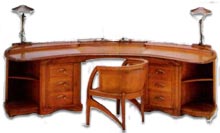
After studying painting in Antwerp and Paris, Van de Velde turned to the decorative arts in the early 1890s inspired by William Morris. He was opposed to historicism and created designs based on flowing, abstract forms.

In 1895 he built and decorated a house in Brussels, Bloemenwerf, for himself and his wife. He met Siegfried Bing and designed rooms for his gallery in Paris.

Following an exhibition of Bing's rooms in Dresden in 1897, and partly as a result of the dealer's increasing preference for French styles, Van de Velde moved to Germany. He received commissions in Berlin and met his patron Karl Ernst Osthaus in 1900.

He helped found the Deutsche Werkbund in 1907, but clashed with the critic Hermann Muthesius because Van de Velde saw standardisation as a threat to the creativity of the individual artist.


Eugene -Emnanuel Viollet-le-Duc (1814 -79)

French architect and writer.

The self -taught architect Viollet-le-Duc was the most famous proponent of the Gothic Revival in France. He was best known for restorations at Pierrefonds and Notre Dame cathedral in Paris, but despite his reverence for the Gothic, he was also a critic of eclectic historicism.

His lectures Entretiens sur L'architecture (Treatises on Architecture; 1863 -72) advocated the adventurous use of iron and glass.

Art Nouveau architects including Victor Horta, Hector Guimard, Antoni Gaudi and Louis Sullivan all cited Viollet as an influence.


Charles Francis Annesley Voysey (1857 -1941)

antique marks - art nouveau  artists - voyseyEnglish architect and designer.

After working for the Gothic Revival architect D Seddon, Voysey began his own firm in 1882.

He was a central figure in the Arts and Crafts Movement, joining the Art Workers Guild in 1884 and showing at the Arts and Crafts exhibitions in London from 1893.

Chiefly remembered for his simple houses, he also designed patterns and furniture during the 1880s that displayed a lyricism which anticipated Art Nouveau.


Otto Wagner (1841 -1918)

Austrian architect. Wagner encountered the work of Karl Friedrich Schinkel while studying in Berlin, and his work in Vienna illustrates the importance of classicism to Viennese Art Nouveau. In 1894 he was commissioned to design stations for the city, and in 1898 his two apartment blocks at 38 and 40 Linke Wienzeile were among the earliest examples of Jugendstil architecture in Vienna. Wagner joined the Secession in 1899, allying himself with the younger radical artists. His Post Office Savings Bank (begun 1903) exemplifies his modern classicism.


Frank Lloyd Wright (1867 -1959) antique marks - art nouveau  artists - frank lloyd wright

American architect and designer.

Between 1888 and 1893 he worked in Chicago for Louis Sullivan, and the influence of Sullivan's organic forms is apparent in his designs and writings. Wright's early work displays close parallels with the development of Art Nouveau in Europe.

From 1901 to 1913 he built a series of 'prairie houses' that combine low geometric forms and spaces with stylised ornament, For Wright, natural setting was crucial to his designs.


antique marks  - everything you need to know about art nouveau antiques antique marks  - everything you need to know about art nouveau antiques
antique marks  - everything you need to know about art nouveau antiques
Top 100 Education SItes
antique marks  - everything you need to know about art nouveau antiques

antique-marks.com antique-marks.com
The Best Webhost In The World
antique marks  - everything you need to know about art nouveau antiques

antique marks   home · blog · for sale · auctions diary · buying · selling · collecting · glossary · privacy policy · sitemap
antique-marks.com