
Contents
5 Things You Must Check Before Buying A Grandfather or Longcase Clock

Buying longcase clocks or Grandfather clocks as they are more commonly known gives us an opportunity to purchase one of the very few actual working pieces of antique furniture
However, you should be aware that buying a longcase clock that doesn't actually work can represent significant financial risk.
The mechanical movements in antique longcase clocks have probably been around for hundreds of years.
They may have been subject to too much servicing and probably some repair or alteration.
It would be wise therefore, for you to acquire some knowledge or Horological experience before you hand over your hard earned cash.
Even for anybody with the proper knowledge, buying a longcase clock that is not working, represents a tremendous financial gamble.
There are a number of things that can make a clock movement stop working. Points that are not so obvious when taking your first casual look.
It takes just a small amount of wear on the pivots and pinions to alter the depth of the train which will stop the clock and ensure the movement needs a complete strip down and resulting in a major repair.
The pallets on the escapement could be at the wrong depth or worn which is not always seen by the untrained eye and at today's repair prices done by a reputable clock repairer, these problems could cost hundreds of pounds.
So if you do not have the adequate skills or knowledge find someone who has, it will save you hundreds of pounds in the long run and remember all clocks running or not need close scrutiny before purchasing.
Five things to check before you buy your antique longcase clock.
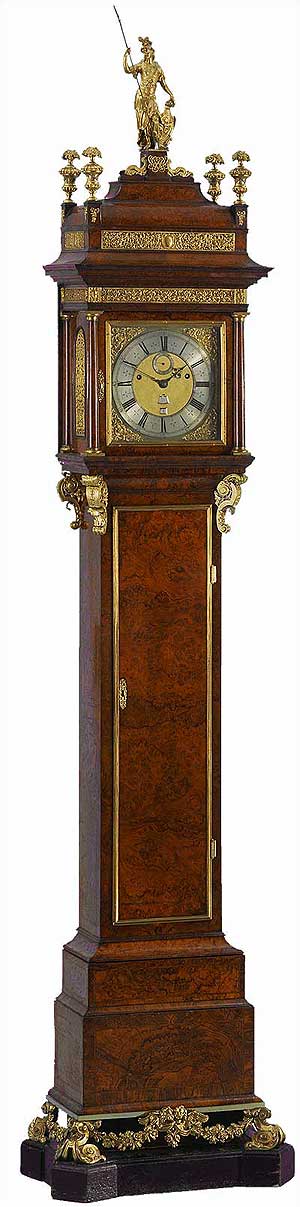
- After making sure there is no major surgery needed to the movement and dial take a good look at the overall appearance of the clock case.
- Look for parts missing or damaged, i.e. the correct feet or plinth are there and the base has not been cut down to fit into a room with a low ceiling.
- The same goes for the pediment or the top of the case hood. Look for any veneers or stringing that may be missing or loose and check fret work on the hood to see that it is not damaged.
- Check the polish or finish of the case looking for cracking or splitting caused by shrinkage or exposure to direct sunlight. Although these can be small jobs, the cost of restoration can mount up and increase your overall investment
- Look for any pieces of the clock furniture missing or damaged, the brass or wooden finials that should be on the top of the hood, hinges to the trunk and hood doors are working correctly. Check escutcheons and locks, if any, and hood pillar caps.
- Take a good look at the case hood and make sure it fits onto the case correctly and check the dial mask fits correctly around the dial, any gaps or overlapping is a sure sign of a marriage, this could be where some unscrupulous dealer has put a movement into another case.
- Take off the hood and inspect the trunk cheeks. This is the top part of the trunk where the movement's seat board, the piece of timber the movement is fastened to, sits on the trunk. Check nothing has been altered or blocks have not been added, this to can be a sign of a marry up (wrong movement in the wrong case).
- Open the trunk door and take a look at the back board, about the height were the pendulum bob is situated, and have a look for scratch marks made by the pendulum indicating an ill-fitting movement, once again a sure sign of possible alterations.
Remember if buying a longcase clock ... It is always best to be on the safe side and buy from a reputable clock dealer if your knowledge on this subject is a little sparse.
Buying from any auction or from some well meaning, honest retired old couple with all their reassurances that the clock has been in the family since it was salvaged from Noah could appear to be a bargain.
But it will almost certainly cost you three times as much in repairs and restoration. So be careful ... from an original article by Barry Share the proprietor of Riversdale Clocks
Leave a Reply
You must be logged in to post a comment.