
Contents
Tips and Advice on Caring for Antique Costumes and Textiles
The delicate fibres and dyes of antique costumes, textiles and fabrics make them very sensitive to the changing atmospheric conditions in your home.
Antique fabrics and textiles need special protection as they are easily torn and absorb stains and smells.
So keep them out of reach of children and pets; away from smoke and food and drink.
- In a dry atmosphere textiles can become brittle
- in damp they rot with mildew and mould
- overexposure to bright light can break down fibres, fade the colours and cause discolouration.
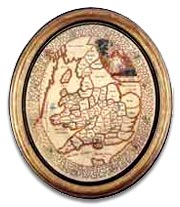
Many textiles incorporate materials of different strengths such as beads or fine embroidery, which must be taken into account when cleaning or displaying.
Handle antique fabrics and textiles as little as possible too avoid damaging delicate fibres and check them regularly for early signs of damage, mould or insect infestation.
Antique Samplers and Embroidery.
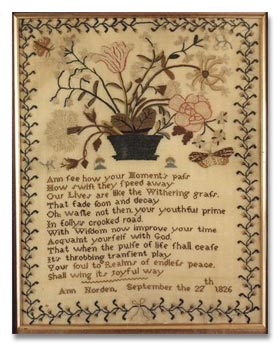
Antique samplers and embroidered pictures are sometimes found mounted on stretchers like oil paintings, but this strains both the fabric and the stitches.
Instead any small flat textile can be framed and mounted on a fabric covered acid free board with a window mount too prevent the textile coming into direct contact with the glass.
Specialists in antique textiles such as Witney Antiques of Witney in Oxfordshire can offer expert advice on the care and handling of antique samplers and embroidery.
Resting Textiles - Every so often give antique costumes and textiles a rest away from display.
Choose a dark dry place and remove any pins.
Wrap the costune or fabric in acid free materials, never coloured tissue or newspaper as both are highly acidic.
Store coloured and white fabrics separately just in case dyes run.
When packing, avoid sharp folds and use tissue if necessary to support the inside of any creases as they strain the fabric.
Never use drawing pins or staples to secure fabrics or textiles as they tear the fibres and may corrode and stain the fabric.
Stainless steel pins can be useful in supporting heavy folds which may sag and tear on an antique costume that you want to display on a stand.
Lay flat textiles horizontally or rolled around a roll of card or tissue and interleave with more card or tissue.
To prepare the costumes for storage, loosely fill out the shape with scrunched up tissue or a padding of cotton or linen and an inert stuffing material. Place a final layer of tissue over the costumes and place them in a container lined with acid free material.
Large costumes can be hung on a padded wooden hanger. Make sure you never use wire hanger as it may corrode and stain the fabric. Protect the costume from dust using a cotton or calico bag. Then check that the costume hangs well and that the shoulder of the hanger is not too long or distorts the fall of the sleeves.
Moth balls can help deter pests and mould but they should never come into contact with the costume fabric or take the place of regular checking.
As long as insect larvae have not begun to attack the costume fabric, they can be brushed off gently. Do this outside on a fine day away from other textiles when the fabric is dry and well aired.
Serious insect infestation in antique costumes should be dealt with by a professional restorer or conservation specialist.
The cleaning and repair of antique costumes, fabrics and textiles.
There is a high risk of irreparable damage and of de-valuing an important or delicate antique costume or fabric by inexpert cleaning or repair.
Before attempting any spot removal or wet or dry cleaning of an antique costume, fabric or textile check with an expert as it may need to receive specific treatment from a conservation specialist or restorer.
Every time a fabric or textile is cleaned it gets a little weaker, so it's wise to tolerate a certain level of dirt.
Never iron dirty textiles as heat seals dirt into the fabric, fixes stains and can cause fading.
If the costume fabric or the textile is sound and has no loose parts such as beads or tassels, dust can be removed by gentle vacuuming. If necessary cover the nozzle with a fine mesh or a nylon stocking and secure it with an elastic band.
Feathers, sequins and elaborate decoration on costumes and fabrics can be dusted with a soft brush or blown with a hairdryer set on cool.
A conservation specialist or costume restorer can restore torn areas almost invisibly, using matching dyes, threads and tension, and can strengthen weak fabrics by couching onto a backing with very fine thread and stitching.
Restorers and conservation specialists will avoid using glues, as there use is almost never reversible and may stain or destroy the texture of the costume fabric. However, to fix something that was glued originally a water based adhesive such as tenaxatex can be used.
Colour fastness
Always spot test antique costumes, fabrics or textiles for colour fastness before using any liquid to remove a mark.
- Place white acid free blotting paper beneath the item.
- Soak a small piece of cotton wool in water mixed with the cleaning agent you intend to use.
- Place it on an inconspicuous area of the textile and watch for any reaction.
- If any trace of a colour appears on either the cotton wool or the blotting paper, quickly dry the area with a medium hot hair dryer and forget about washing the item.
- Make sure you test each colour in the same way.
Leave a Reply
You must be logged in to post a comment.